For people with insomnia, drinking tea right before bed is generally not recommended. However, the stimulating effect of tea is not long-lasting, so having tea at other times of the day usually does not interfere with nighttime sleep. In fact, if you drink tea during working hours, it can boost daytime productivity, and paradoxically, that may make it easier to relax and rest at night.
For those who still crave a warm drink in the evening, a cup of milk tea may be a better choice, as it is believed to have a mild sleep-promoting effect.
Doctor’s Note:
It is advisable for insomnia sufferers to avoid excitement and heavy eating before bedtime. Instead, gentle relaxation activities—such as deep breathing or listening to soft music—can be helpful. Keep the bedroom well-ventilated, limit fluid intake to reduce nighttime awakenings, and most importantly, avoid strong or highly caffeinated teas. Soaking your feet in warm water can also relieve fatigue and promote better sleep.
Herbal Tea Recommendation:
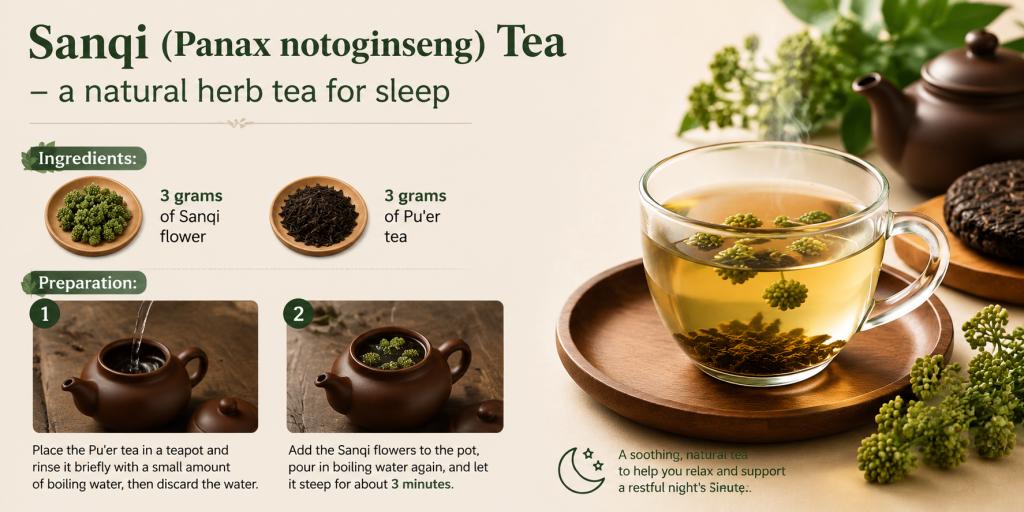
Sanqi (Panax notoginseng) Tea – a natural herbal tea for sleep
Ingredients:
- 3 grams of Sanqi flower
- 3 grams of Pu’er tea
Preparation:
- Place the Pu’er tea in a teapot and rinse it briefly with a small amount of boiling water, then discard the water.
- Add the Sanqi flowers to the pot, pour in boiling water again, and let it steep for about 3 minutes.
Health Benefits:
Sanqi flower is known in traditional herbal practice for soothing the liver, promoting the smooth flow of qi and blood, and helping to balance the yin-yang of the heart, liver, and spleen. This calming effect on the body and mind is why this sleepytime tea can serve as a gentle tea for insomnia, supporting a more peaceful state before bed.
Who Should Avoid It:
This tea is not suitable for women during menstruation or for pregnant women.

Explore our herbal teas:
Chinese Herbal Tea for Sleep | Natural Sleepytime Tea, 32 Tea Bags