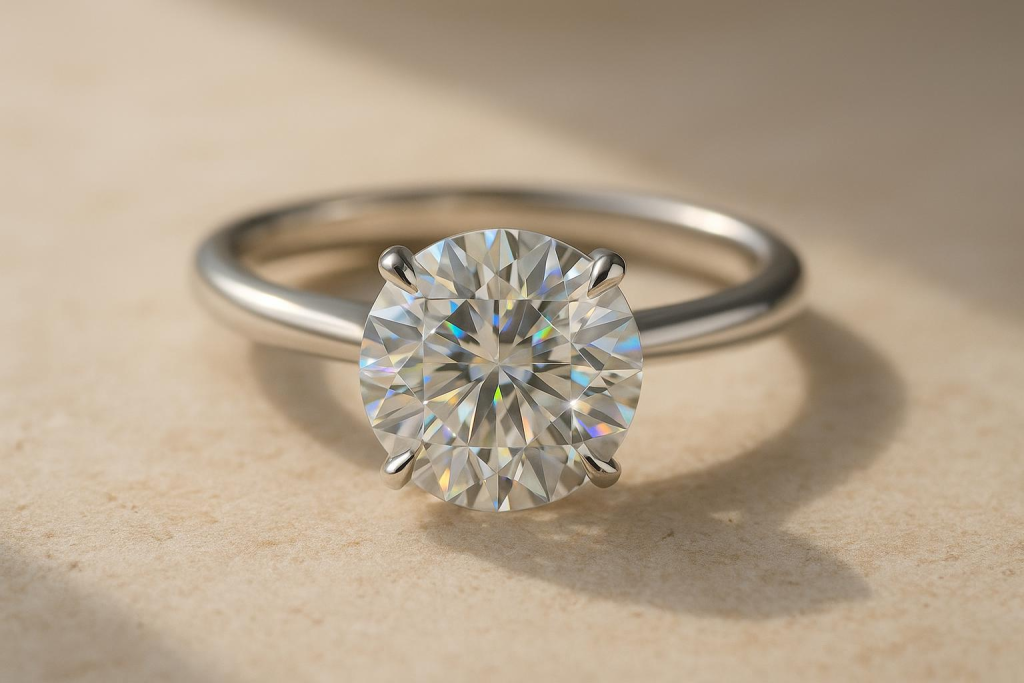
Introduction
Moissanite engagement rings make a lot of sense in 2026: you can get a big, high-sparkle look without the price volatility of mined diamonds—and with fewer ethical question marks than many natural-stone supply chains. They’ve also become a “known quantity” for everyday wear: modern moissanite is consistent, widely available, and easy to shop online.
This guide is designed to help you make a confident, drama-free purchase. You’ll learn how moissanite performs in real life, what price ranges are typical in the U.S., how to choose quality without getting lost in jargon, and which steps protect you when buying online.
It’s written for U.S. shoppers who are comparing moissanite vs diamond and moissanite vs lab grown diamond—especially if you’re trying to balance budget, size, sparkle style, and long-term wear.
Quick facts that matter for daily-wear rings: moissanite has a refractive index of about 2.65–2.69 and dispersion around 0.104 (both contribute to intense brilliance and “fire”), and it’s typically cited around ~9.25 on the Mohs hardness scale for durability, according to Charles & Colvard’s “Moissanite 101” (updated 2026).
Reading roadmap: we’ll start with performance and value (including what the sparkle looks like compared with diamond), then move into a practical quality-and-size approach (think millimeters, not just “carats”), and end with a simple checklist that reduces buying risk.
How to Choose in 2026 (Moissanite Engagement Rings)
Moissanite Performance & Value (Moissanite Engagement Rings)
If you love sparkle, moissanite is hard to beat. Its optical properties tend to throw strong white sparkle plus colorful flashes, especially in bright lighting. That’s why some people describe it as “more fiery” than diamond.
That same trait is also the main tradeoff: if you prefer a more “crisp, white sparkle” with fewer rainbow flashes, a well-cut diamond or lab-grown diamond may better match your taste. In other words, performance isn’t just about brilliance—it’s about sparkle style.
Durability is the next question. A ring is a daily-wear piece that gets knocked into countertops, doorknobs, gym equipment, and handbag hardware. In practical terms, moissanite durability is one of its strongest selling points: its commonly cited hardness (~9.25 Mohs) puts it in a strong zone for engagement rings—high resistance to scratching in normal life. (Hardness isn’t the only factor—setting quality and prong security matter just as much—but it’s a reassuring baseline.)
Value in 2026 typically comes from three places, including what many shoppers think of as moissanite ring price predictability compared to natural diamonds:
- Bigger look per dollar: You can often jump up in “diamond equivalent” size while staying within budget.
- Stable day-to-day pricing: Moissanite pricing is generally less emotionally driven than natural diamonds; you’ll still see range by vendor and setting, but fewer surprise spikes.
- Lower stress around compromises: You can prioritize cut and setting quality instead of stretching your budget to hit a diamond carat number.
Pro Tip: If you’re deciding between moissanite and lab-grown diamond, don’t just compare “carats.” Compare the face-up size in millimeters, the cut quality (light performance), and the setting you can afford after the center stone.
Quality & Size Guide
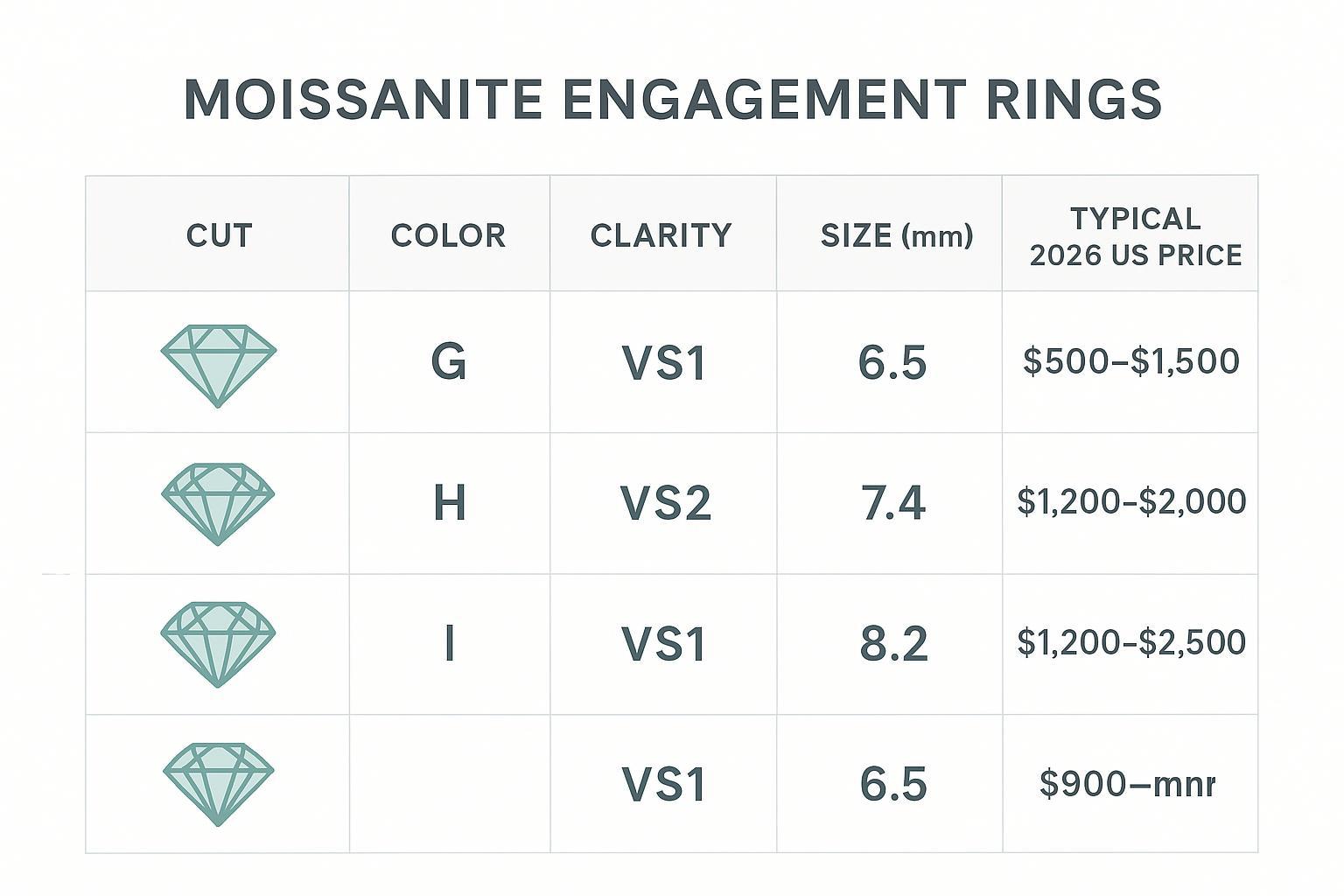
Moissanite isn’t graded exactly like diamond in every store, so the smartest way to shop is to translate the “4Cs mindset” into moissanite-friendly checks—and put extra emphasis on cut and millimeters.
1) Cut: the non-negotiable for beauty
Cut quality is what determines whether the stone looks alive in normal indoor lighting (not just under bright showroom lights). For moissanite, a strong cut helps control how the stone returns light and can make the sparkle look cleaner and more intentional.
- If you want maximum brightness and symmetry, round brilliant is the safest choice.
- If you want a bigger face-up look, elongated shapes like oval or pear can look larger at the same “equivalent carat” size.
2) Color: choose based on metal and your sensitivity
You’ll commonly see moissanite described as colorless, near-colorless, or warm. The “right” choice depends on your setting metal and whether you notice warmth.
- If you’re setting in white gold or platinum, many shoppers prefer colorless/near-colorless to keep the overall look icy.
- If you’re setting in yellow or rose gold, a slightly warmer moissanite can blend beautifully and look intentional.
3) Clarity: high clarity is common—watch for haziness instead
Moissanite is lab-created, so high clarity is widely available. Instead of obsessing over tiny inclusions you’ll never see, prioritize:
- Clear, crisp facet edges in video
- No persistent “milky” or hazy look in diffused light
4) Size: shop by millimeters first
With moissanite, “diamond equivalent” sizing is usually communicated as a familiar shorthand. Still, millimeters are what your eyes see.
As a rough anchor (varies by cut and shape):
- 1.0 ct DE is often around 6.5 mm for a round look
- 1.5 ct DE often lands around 7.3–7.5 mm
- 2.0 ct DE is often around 8.0–8.2 mm
Use size to keep the ring proportional to your finger and lifestyle. A larger stone can be stunning—but it also sits higher, catches on things, and may demand a sturdier setting.
Secure Purchase Checklist
Buying online can be a great value move, but only if you make the transaction “boring”: clear documentation, clear policies, and clear expectations.
Use this checklist before you pay:
- Return window and condition rules (in writing). Aim for a meaningful return window, and confirm whether “try-on” counts as worn.
- Warranty terms that match real life. Look for coverage that clearly explains what happens if a stone loosens, a prong bends, or you need resizing.
- Multiple videos in varied lighting. Ask for at least one video in diffused indoor light and one in brighter light so you can evaluate sparkle style and check for haziness.
- Setting details and maintenance expectations. Confirm metal type (14k/18k, platinum), band width, prong style, and whether routine prong checks are recommended.
- Independent appraisal plan. After delivery, consider an appraisal for insurance documentation; Jewelers of America explains why many appraisals today are for insurance replacement purposes in its jewelry appraisal guidance.
- Payment method with buyer protection. Use a payment option that provides dispute resolution if the item delivered doesn’t match the listing.
- Shipping insurance + signature required. Especially for engagement rings.
- Truth-in-advertising comfort check. If the listing language feels vague or overpromised, pause. The FTC’s jewelry industry guidance is a useful reminder of why clear descriptions and disclosures matter.
⚠️ Warning: Be wary of listings that only show one “perfect” studio image and avoid showing the ring on-hand or in motion. For sparkle-heavy stones, video is where you catch most issues.
Conclusion
Moissanite engagement rings are a smart 2026 choice if you want intense sparkle, strong day-to-day durability, and a budget that goes further—without compromising on a meaningful, ethical-feeling purchase.
Next steps: set your budget (stone plus setting), pick your shape/setting/metal combination, then confirm quality signals (cut performance, color appearance in your chosen metal, and clarity without haziness) and vendor policies.
To buy with confidence: verify documentation and return terms, inspect multiple videos in different lighting, and treat routine care as part of ownership—especially prong checks and periodic cleaning so your ring stays secure and brilliantly bright.
Find Moissanite Engagement Rings from our Collection
Products by Category
-
Heart Shaped Moissanite Engagement Ring | Silver Pave Band Wedding Promise Ring For Women
$25.90 -
Heart Shaped Moissanite Engagement Ring Crown Tiara Bridal Set for Women S925
$44.90 -
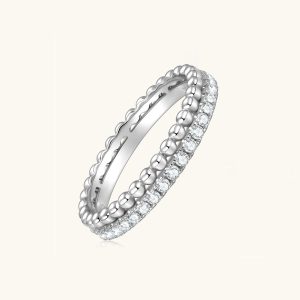
Luxury Moissanite Double Band Eternity Engagement Ring – S925 Sterling Silver Stacking Ring for Women
$35.90 -
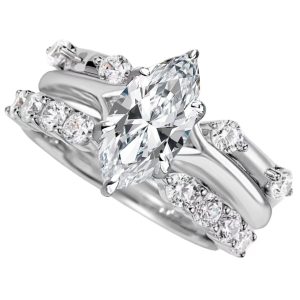
Marquise Cut Moissanite Engagement Ring Set – 3-Piece Bridal Wedding Bands for Women
$89.90 -
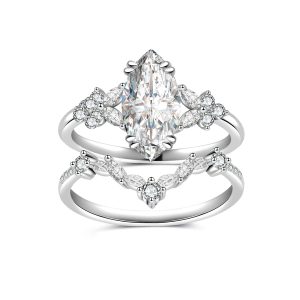
Marquise Cut Moissanite Engagement Rings for Women, S925 Sterling Silver Stackable Wedding Band Set, 2CT Lab Diamond Bridal Jewelry
$37.90 -
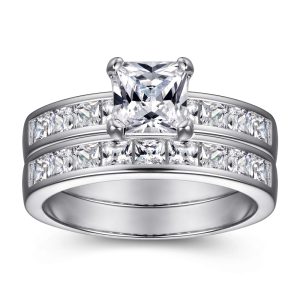
Princess Cut Moissanite Engagement Ring Set 14K White Gold Plated Silver
$56.90 -
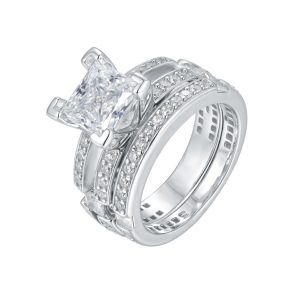
Princess Cut Moissanite Engagement Ring Set Stackable, Pave Band Wedding Ring Bridal Set
$39.90 -
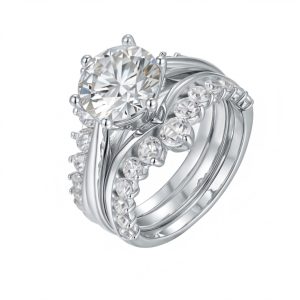
Round Cut Moissanite Engagement Ring Set for Women, Split Shank Bridal Wedding Ring Set
$39.90 -
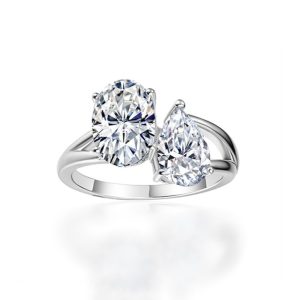
Two Stone Moissanite Engagement Ring, Toi et Moi Bridal Ring
$36.90